Do I need a battery combined with my rooftop solar?
What combination of technologies makes sense?
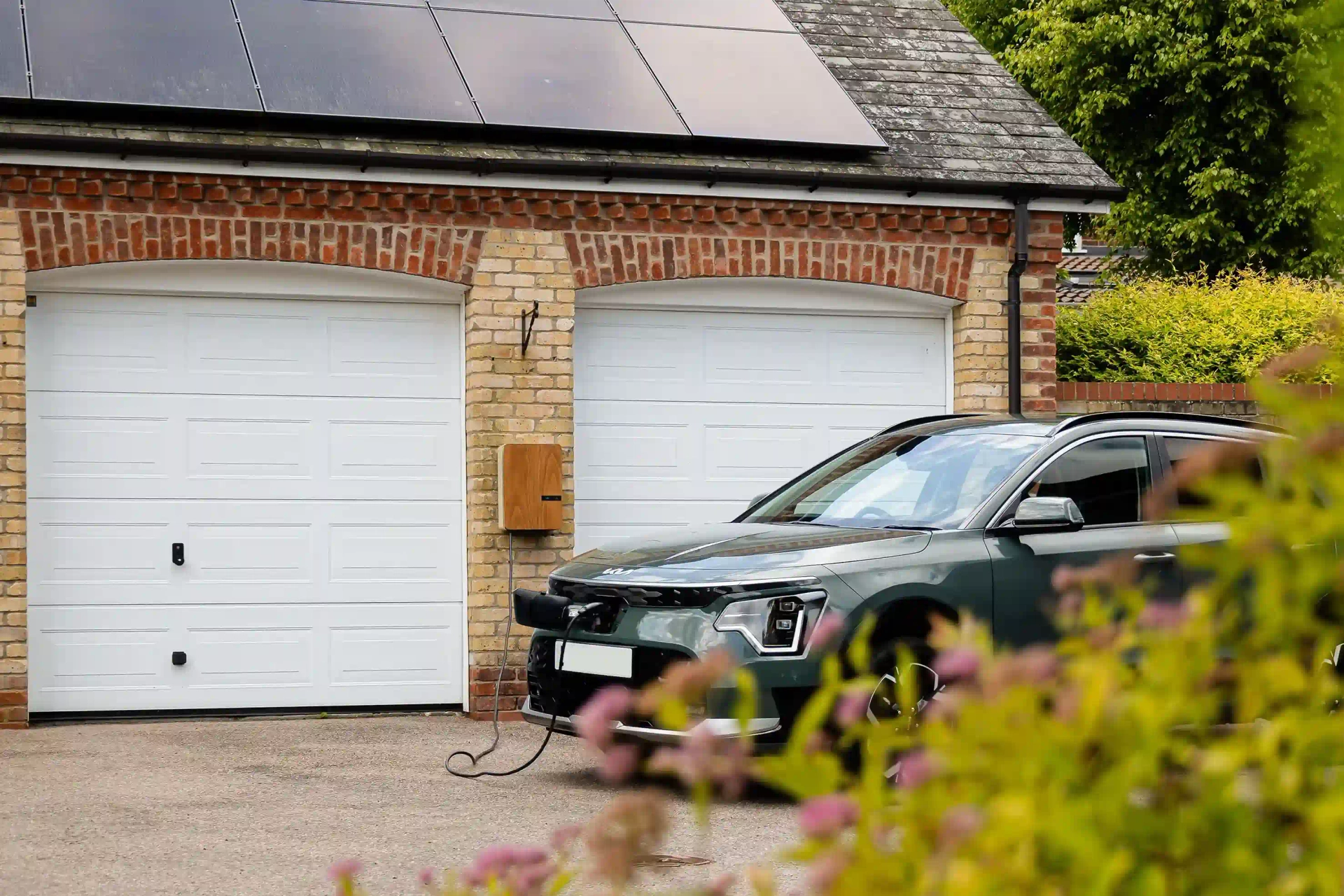
Photo credits: Pexels.
What about an electric vehicle (EV) and a heat pump?
Solar panels alone typically account for 25-40% of a household's usage. Pairing solar with a battery can raise that significantly, with some estimates indicating a 60-90% self-consumption rate.
Adding an EV and heat pump provides you with more options to utilise your self-generated daytime power instead of sending it back to the grid—making sure you really get the most out of your solar.
With negative electricity prices becoming increasingly common in the UK, particularly over summer months, the value of self-generated and self-utilised electricity will only increase.
Here's how a rooftop solar system, home battery, EV, and a heat pump work together, what general order makes sense for adding them.
Why solar alone leaves savings on the table
When your panels generate more electricity than your home uses at that moment, that surplus either gets exported to the grid for a per kWh payment (depending on your provider), or simply is not captured at all.
This happens frequently, since most solar generation is around midday when most households are out.
The gap between what you generate and what you end up using yourself is where a significant share of potential savings quietly disappear.
What an energy-equipped home might look like
A solar, battery, EV and heat pump system works together roughly like this in a 24-hour timeframe:
- Daytime: Solar generation directly powers your home's baseline electricity demand.
- Midday surplus: Excess solar power is used to run your appliances, charge an EV (if you have one) and run a heat pump.
- Remaining surplus: Whatever is left from the generation and midday surplus is stored in a home battery, rather than exported.
- Evening and overnight: The battery discharges to cover your evening peak electricity usage/demand, including continued heat pump operation if needed.
A household equipped with these four technologies—solar, battery, EV and heat pump—can draw from its own stored energy during the evening, which is historically the most expensive time to pull from the grid, instead of paying peak rates.
What a battery, EV and heat pump actually does for you
A home battery is the biggest lever for self-consumption. It is the difference between using part of your own generation, versus potentially most of it.
An EV effectively becomes a mobile battery for you that also reduces your household's overall carbon emissions from commuting. Charging it during the day from surplus solar, or overnight from your home battery using off-peak rates, can offset a meaningful amount of typical fuel or public-charging costs.
A heat pump shifts your home's heating from gas or conventional electric heating to a more efficient form of electric heating, which means it can be partially covered by power you have already generated yourself rather than purchased gas.
Why having an energy independent home matters
Beyond the bills, we've all seen the headlines and felt the heat. The UK's 2026 heatwaves are estimated to have cost the economy £4.4 billion.
Meanwhile, volatile geopolitics continue to put pressure on energy prices and security.
A household generating and storing its own power is naturally more insulated from both price spikes and supply disruption, while reducing pressure on the wider grid.
Do I need all four at once?
This depends on your financial situation and other personal considerations, such as household composition.
Most homeowners build up their suite of energy-efficient technologies over time:
- Start with solar + battery. Most of the financial benefits start here.
- Swap to an EV when you're due a car change.
- Add a heat pump when your heating system needs replacing. Retrofitting a heat pump purely to match with solar rarely makes sense on its own, but timing it around a boiler replacement does.
Our free assessment tool, Emily, can model system expansions as well as new installations.
If you already have solar, you can see what adding a battery, EV charging or heat pump integration could look like, rather than guessing.
Frequently asked questions
Do I need a battery to benefit from an EV or heat pump along with solar?
Not necessarily. However, a battery is what enables you to use solar generation outside of daylight hours. This is usually when EV charging and heating actually happens. Without one, you depend on good timing to sync your usage with sunny hours.
Is self-consumption always better than exporting to the grid?
Generally, yes. The money you save by not buying that electricity from the grid is usually worth more than the Smart Export Guarantee rate. The long-term value of energy independence, or being able to fully utilise the energy you produce, can also have positive impacts on your home's financial future.
Can I add a battery, EV charging or heat pump to an existing solar setup?
Yes, this is system expansion rather than a new install. It can include additional PV, battery-only additions or both, depending on what your existing setup already covers.
What could self-consumption and savings look like for your specific home? Enter your postcode on Emily to model a new system or expansion to your existing solar.
Sources
- Bloomberg (2026)UK power prices turn negative as renewables set to flood grid
- The Guardian (2026) UK heatwaves may have cost economy £4.4bn in lost output so far this year, analysis finds
- Energy Conversion and Management (2025) Economic assessment of self-consumption and energy communities: Profit distribution insights from a real case study
A roof plan and a savings estimate in two minutes.


Done reading? Get your own numbers.
Enter an address, get a roof plan and an estimate.