
What could solar and battery storage deliver financially in the UK?
Your savings estimate and more.
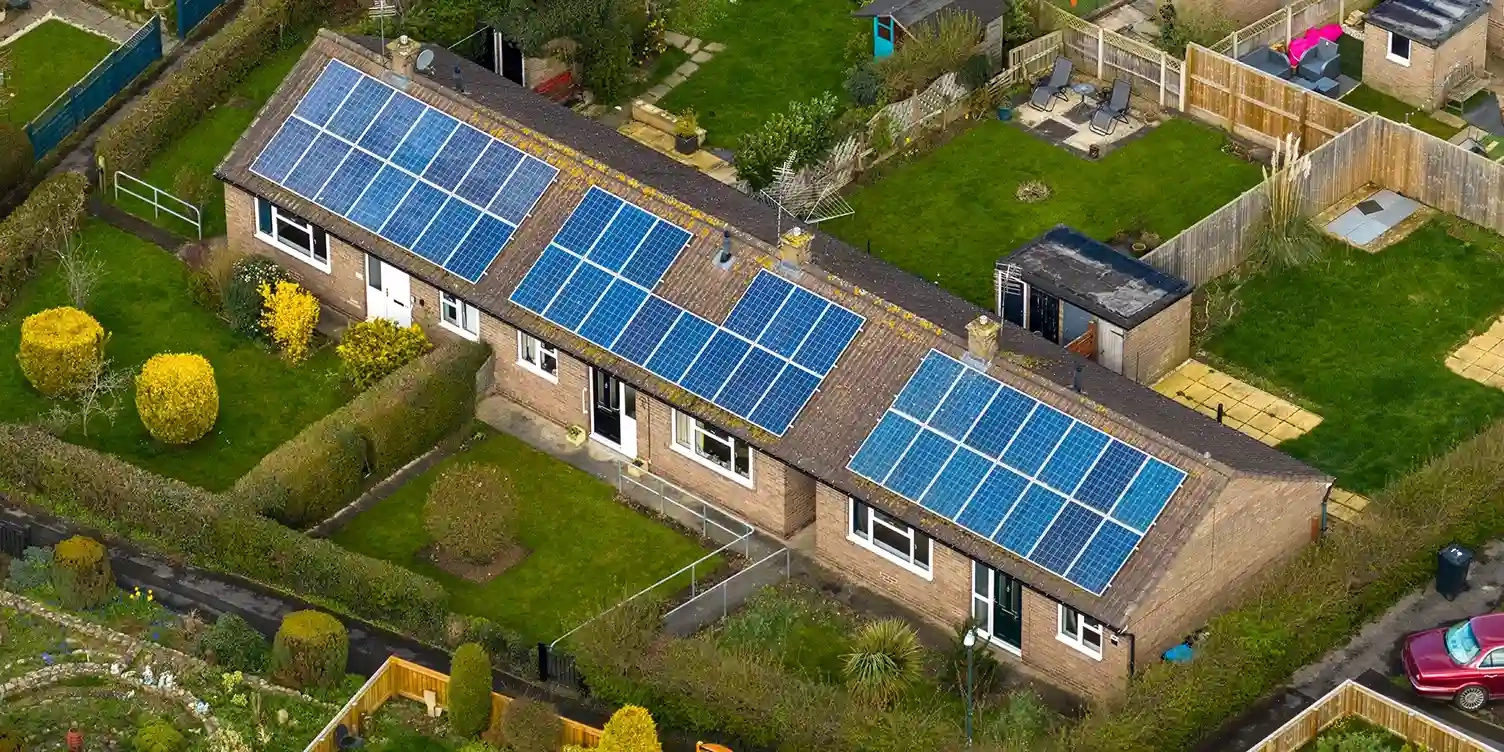
Photo credit: iStock.
For many UK homes, solar and battery storage could deliver savings that build over time. The Rooftop Valuation Report UK, which assessed more than 15 million UK rooftops, estimates average annual electricity bill savings of £946 across the UK for the solar and battery system modelled.
With an average upfront cost of £7,844.50, the report estimates an average payback period of around 7.9 years. Over 20 years, estimated average returns reach £10,832.
But these are UK-wide averages. The numbers for an individual home will depend on the property, household electricity use and the solar and battery system that suits it.
How long does solar and battery storage take to pay for itself?
The Rooftop Valuation Report models a 5.17 kWp solar PV system with a 5 kWh battery across UK rooftops. On average, the numbers look like this:
| Financial measure | National average |
|---|---|
| Upfront cost | £7,844.50 |
| Annual electricity bill saving | £946 |
| Payback period | 7.9 years |
| 10-year returns | £1,555 |
| 20-years returns | £10,832 |
A payback period is the point at which the savings generated by the system have covered its initial cost. After that point, further savings contribute to the longer-term financial return from the system.
Looking over a longer period can therefore give a more complete picture than considering the upfront cost on its own.
Where do the savings from solar and battery storage come from?
Solar panels generate electricity that can be used in your home, reducing the amount of electricity you need to buy from the grid.
A home battery can store some of the solar electricity that isn't needed straight away, making it available to use later when your panels are generating less. This can help households make more use of the electricity generated on their own rooftop.
Eligible households can also receive payments for electricity they export to the grid through schemes such as the Smart Export Guarantee in England, Scotland and Wales.
Together, these factors contribute to the estimated annual savings and longer-term returns calculated for each rooftop.
What could solar and battery storage look like for different locations in the UK?
UK-wide averages provide a useful starting point, but the financial picture varies depending on location. The Rooftop Valuation Report also breaks its findings down to Local Authority District level, showing how estimated annual savings, payback periods and longer-term returns differ across the UK.
| Location | Annual saving | Payback period | 20-year return |
|---|---|---|---|
| Torbay | £1,069 | 7.04 years | £13,222 |
| Belfast | £942 | 7.84 years | £10,798 |
| Glasgow City | £867 | 8.53 years | £9,296 |
| Cardiff | £942 | 7.86 years | £10,758 |
| Fermanagh and Omagh | £883 | 8.36 years | £9,651 |
These examples show how the financial picture for solar and battery storage can vary across the UK. Estimated savings and payback periods differ by location, while each of these examples shows positive estimated returns over 20 years.
Will every home have the same payback period?
Two homes can install solar and battery storage and see different financial results.
The Rooftop Valuation Report takes into account factors including roof size, slope and orientation, the number of panels that can be installed, regional electricity consumption, expected solar generation, system and battery size, self-consumption and system cost when modelling individual rooftops.
Looking at the UK average is useful for context, but it isn’t a prediction for every property. The best way to understand whether solar and battery storage could be worthwhile for you is to look at the numbers for your own rooftop.
How can I find out what solar and battery storage could mean for my home?
Our AI agent, Emily, can assess your rooftop and show different solar and battery options alongside estimates for electricity generation, annual savings and payback.
This gives you a personalised starting point for comparing the potential cost and savings before deciding whether you'd like to explore installation.
→ Enter your postcode for a free, personalised assessment.Frequently asked questions
How long does solar and battery storage take to pay back in the UK?
The Rooftop Valuation Report estimates an average payback period of around 7.9 years for the 5.17 kWp solar and 5 kWh battery system modelled. The estimated payback for an individual home can vary.
How much could solar and battery storage save each year?
Across more than 15 million UK rooftops assessed, the report estimates average annual electricity bill savings of £946. Your estimated savings will depend on your property, electricity use and system.
What happens after solar has paid for itself?
Payback refers to the point when accumulated savings have covered the initial system cost. Savings generated after this point contribute to the system's longer-term financial return. The report estimates an average return of £10,832 after 20 years.
Why include a battery with solar panels?
A battery can store some of the solar electricity that isn't used immediately so that it can be used later. This can help households use more of the electricity generated by their own solar panels.
Figures from the Rooftop Valuation Report are modelled estimates and are not a guarantee of costs, savings, payback or returns for an individual property. Actual results will depend on the property, system, household electricity use and other factors.
Sources
- GreenSketch (2026) The Rooftop Valuation Report: United Kingdom
- Energy Saving Trust (2026) Battery Storage
- Energy Saving Trust (2026) Smart Export Guarantee
A roof plan and a savings estimate in two minutes.


Done reading? Get your own numbers.
Enter an address, get a roof plan and an estimate.